The Little Things Matter

In certain of my courses I assign Bible memorization. The goal and requirement of these assignments is “word perfect.” In this context, “word perfect” means the words appear exactly as they do when you read them in a published Bible. Each mistake (e.g., missing word, additional word, wrong order) reduces the score by ten points, and five mistakes is the maximum allowed. If a student makes more than five mistakes, their score is a ZERO. Thus, the possible grades for this type of assignment are 100, 90, 80, 70, 60, 50, or 0.

The above explanation seems fairly simple and straightforward, but students often offer push back. Sometimes they wonder why five mistakes is acceptable and six is not. My answer: Even five mistakes is not acceptable; word perfect is the goal. And, although six mistakes is only one more than five, there is a certain point at which the student simply didn’t get enough correct to warrant credit or demonstrate any level of mastery. And, five mistakes is where I draw the line. While feeling “unfair” to those who make more than five mistakes, the above system seems to offer a measure of grace while still expecting perfection; i.e., it allows some points for mediocre, even poor performance. Yet it still requires the student to produce something.

The most interesting push back, though, is from those scoring 90, which means they made only one mistake. Frequently, the complaint is, “It’s just one word.” I understand the point they are trying to make, but I’m not sure they understand the point they are actually making. To whit: “one word does not matter.” Granted, all mistakes are not equal. But since this is a training exercise and the goal is perfection, all mistakes are treated equally. One must also remember that this is God’s word the students are memorizing, so forgetting or adding one word can be critical.

On a trip to Israel in 1995, my flight boarded but was delayed. A fifteen minute delay turned into a three-hour delay, before the flight was finally rescheduled for the next day. As the captain made the announcement of the cancellation, I was standing in the doorway beside an Israeli man whose countenance dropped to the floor upon hearing the news. I tried to cheer him up by saying (in Hebrew), “Don’t worry, they will give us a nice halon.” His puzzled look, puzzled me. He didn’t say anything; he simply turned and walked away. We deplaned and were bused to the hotel the airline had provided for us. I didn’t think anything more of the oddness of my “conversation” with the Israeli man until I saw him at breakfast the next morning. Immediately upon seeing him, it occurred to me what I had said. What I intended to say was “They will give us a nice hotel” (malon). What I actually said was “They will give us a nice window.” No wonder he looked puzzled. Embarrassing, to say the least. Oh well, sometimes a mistake is simply a mistake and amounts to nothing … but a little awkwardness or humor. On the other hand …

I once read an evangelistic blog article that was making a good argument for trusting in Christ, until … “all you have to do is except Jesus.” What she meant was “accept,” which means to “consent” or “receive.” What she actually wrote, “except,” essentially means the opposite, “to exclude.” But, it’s just one word; in fact, it’s just two letters. However, those two letters can make all the difference … in eternity.
My New Friend

Last week while passing a lumber yard, I noticed a man sorting through what appeared to be clean discards. I hadn’t noticed that before, so I wasn’t sure what I had seen. With my curiosity piqued and my hoarder tendencies activated, I made my way safely into the turn lane, then backed up 50 yards or so to investigate more closely. I rolled my window down as I backed into the entrance, then asked the man, “Is that give-away lumber?” “Yes,” he responded about the time I saw the spray painted “FREE” sign in front of the rack of miscellaneous pieces of lumber. As he looked up, he said, “I’ve got lots of ideas for this wood.” That fueled my interests more, and the possibilities started to race through my brain as I clumsily tried to push pause on the Ted Talk on reducing clutter in my life that was emanating from my phone. Reducing clutter had suddenly become less important in the presence of a treasure trove of possibilities residing in that stack of free lumber pieces.

As I approached the stack, I found myself in the midst of a mental and emotional battle: On the one hand, even though I had no intended purpose for the lumber, it was there. And. It. Was. Free. On the other hand, I had listened to several Ted Talks that morning that focused on organizing my life by simplifying, which included reducing clutter and stuff that I don’t need. Should I or shouldn’t I? Yes! No! I don’t know!

In an effort to find reprieve from the “yes/no” battle going on in my head and heart, I offered to help the man get his lumber into his car. To his objection, I grabbed all his wood and said, “I’ll get this, you open the back.” As I looked back, I noticed that he was noticeably dragging his right foot. His hat said “US Army Disabled Veteran” so I thanked him for his service and used that as conversation starter, which is one of the tips for engaging with others that I teach my classes. However, while we continued with the small talk, my mind kept returning to the free wood. Should I take some or not?

During our conversation, the man struggled to remember common information. For example, when I asked where he is from, he immediately said, “California.” However, as he continued to tell me that his wife was from Missouri, he struggled to remember the city. “She’s from … just a second. She’s from … uh … uh … uh … it starts with a B. She’s from Bri___ no, that’s not it. Sorry, I can’t remember the name of the town.” As he tried to remember the name of his wife’s home town he even tried to spell it out with his finger in the air, but it never came to him. Then, he apologized again for not being able to remember the city before he confessed something really personal. “Listen, I had a stroke recently and I … uh … uh … uh …,” he said as he motioned around his head with his finger. I helped him finish his thought, “And things aren’t always connecting.” “Yes. Things aren’t always connecting.”

Then he asked me, “Are … you … uh … are you … uh … a … Christian?” In that moment, I noted something really important. My new friend who had just confessed that “things aren’t always connecting” in his brain because of the stroke, had not lost his heart concern that others know his savior. It would have been easier to let it slide and simply hope the best for me. Or, not to even think about me again. Who could blame him. He had suffered a stroke, after all. But, Christ matters.

I’ve thought much about this encounter in these intervening days. I’m thankful for a real example to share with my students. I’m also thankful for a real example to remind myself about the priorities in my own life.

I’m thankful someone cared about me. Note to self: Now, go and do likewise.

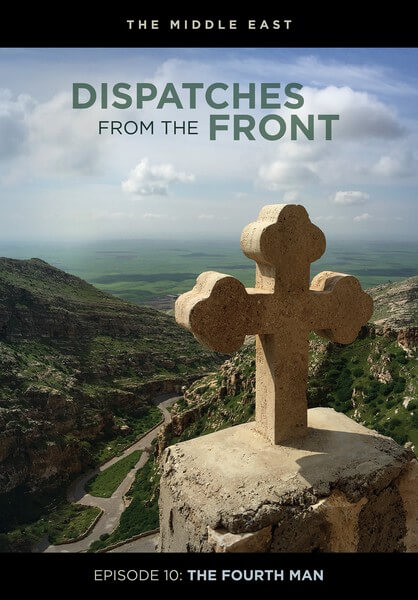
The Fourth Man (Dispatches from the Front Episode 10)

The announcement of the latest release in the Dispatches from the Front series, Episode 10: The Fourth Man is welcome news! (Available from Westminister Bookstore by clicking the title link above.)

Among the very best missions video series available is  Dispatches from the Front by Frontline Missions International (follow FMI@Twitter). The intention of the video series is to bring “viewers up-close with sights and sounds from distant corners of the Kingdom.” Why? Because believers “everywhere desperately need a renewed vision of Christ and the unstoppable advance of His saving work in all the earth.”1 To this end, Dispatches from the Front succeeds in every way.

The sights, sounds, and reflective narration are informative, encouraging and challenging because they provide an inside look at real ministry done by real people in real places around the globe.

In this 10th installment in the series, Tim Keesee takes the viewer into new territory: The Middle East.

“He is risen!”—three words that change everything. This wonderfully good news that was first announced to the women at the Empty Tomb is still being declared boldly in the Middle East by the Risen King’s messengers! Dispatches from the Front goes into this region of centuries-old darkness and division that is now overshadowed by the fierce violence of ISIS terror. Yet, the Gospel is powerfully at work in the Middle East, and Christ is building His Church there just as He said He would. Neither the gates of hell nor the gates of Islam can withstand the work of our Risen King! From mega-cities in Arabia to refugee camps left in the wake of ISIS terror, The Fourth Man goes beyond the headlines to showcase the Gospel’s power to save, the mercy and love of believers, and their abiding joy as Christ walks through the fires of persecution with them.2

I have personally watched all of the previous episodes multiple times and have included them in the curricula of my college and seminary missions courses. So, add my name to the long list of enthusiastic endorsements, which include, among others, Tim Challies, Mark Dever, John Piper, Carl Trueman, David J. Hesselgrave, and Justin Taylor.

It matters not whether you are a seminary or Bible college student, a missions pastor, or a lay member of your church that knows nothing about missions, you can benefit from this series.

Dr. Craig A. Dunning, PhD
Lead Professor of Intercultural Studies/Missions
Baptist Bible College and Theological Seminary
#GoBBCLife Change U!

The video clip below will give you an idea of what’s inside episode 10.

1 http://tinyurl.com/m4sgstg
2 http://tinyurl.com/l22meyh

ISIS and the Gospel

WARNING: Links in this post may lead to GRAPHIC CONTENT!

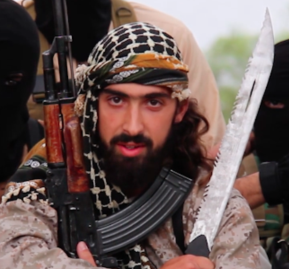
Abu Maryam al-Faransi left France to join ISIS.

Abu Maryam al-Faransi left France to join ISIS.

The news coming from the Islamic State is, at best, unsettling. As a result of effective recruiting, foreign fighters from both Muslim countries and the West are swelling the ranks of the ISIS army (see here, here, and here). In addition to the West’s apparent failure in turning certain of their citizens away from jihadi ideology, or western nations’ apparent failure to prevent these same people from making their way to Syria to join the battle, several elements of the ISIS jihad story lead observers to conclude that the situation in Syria/Iraq is hopeless. Two of those elements are martyrdom and brutality.

Martyrdom: A Desire to Die

“We love dying for God as much as you love life.” ISIS fighter, Rabie Shehada

That they are likely to be killed in the battle to expand the boundaries of the Islamic State doesn’t seem to dissuade the recruits. In fact, the prospect of dying as a martyr for Allah seems to be a draw (see here, here, and here). Targeting this element of jihadi ideology – the desire to die for the cause – recruiters are using social media to publish photos of many of their soldiers who died with smiles on their faces (see here, here, and here), which suggests they died happy martyrs.

With every new conflict comes imaginative new methods to recruit fighters and soldiers on all sides. While the US Military uses high budget television adverts or internet campaigns designed to show off the superiority of their forces, the propaganda wing of the Islamic State has taken to posting and sharing pictures and videos of dying and dead “martyrs”, all smiling. najemoi.com

 Brutality: Glorifying and Defending a Way of Life

The brutality of ISIS – which includes, among other things, hanging captives from their feet, repeated mock executions, extra-judicial mass executions, rape, sexual and physical enslavement, beheading, and the public parading of heads and decapitated bodies – has been widely reported by released hostages (see here, here, and here) and/or confirmed by video, photos, and commentary released through ISIS channels (see here, here, and here).

ISIS has successfully utilized the brutality of their movement to recruit the discontent or wandering souls (both males and females) who seek purpose and meaning in life (see here, here, and video here).

“For many people who are lacking a strong sense of identity and purpose, their violent radical global narrative provides easy answers and solutions: it can be very powerful message for people who are looking for answers,” … “Their online material shows capturing territory, establishing states, beheading enemies: they show that they are the sexiest jihadi group on the block.” Matthew Levitt, Washington Institute for Near East Policy.

Not only has brutality been an effective recruiting tool for ISIS, it is also intended to bring into submission those whom ISIS deems to be enemies. In the Islamic State, submission takes different forms: forced conversion to Islam, evacuation to safer locations (see here and here), or paying a security/protection tax.

Those who are concerned that the gospel be effectively taken to all, have to wonder if it is possible to get the gospel to people within ISIS. And, even if one succeeded in getting it there, is it possible for a person that glories in beheading aid workers, a person that appears to glory in evil, to believe the gospel? My answer: There is hope. Even ISIS fighters and their brides can be reached with the gospel.

Below, I offer two lines of evidence that give me gospel hope for those who are engaged in this type of jihad with ISIS or any other group that seems too radical to be redeemed; one is biblical, the other is research based.

Biblical Evidence: ISIS Fighters Can Be Saved

The first source of hope is Paul’s inclusion of the “Scythian” in Colossians 3:11 (ESV): “Here there is not Greek and Jew, circumcised and uncircumcised, barbarian, Scythian, slave, free; but Christ is all, and in all.” In this verse Paul provides a list of four pairs of identities that are not to be given preference in Christ: Greek and Jew, circumcised and uncircumcised, barbarian and Scythian, and slave and free. Although it isn’t Paul’s primary point, his use of each of these pairs suggests that people from each background or identity can be found within the faith community.

To be clear: I’m not making the argument that ISIS is a descendent movement or ideology of the Scythians. I am suggesting the extreme cruelty of both groups, which some think reflects an unredeemable spirit, is similar. For example, Yamauchi (Biblical Archaeologist 46:2, p. 98) provides a description of the Scythians, which compares to the actions of ISIS today:

“[The Scythians’] reputation for ferocity, their scalping of captives, and their other barbarous customs made their name synonymous with savagery down into the Christian era…”

According to Encyclopedia Britannica:

The Scythian army was made up of freemen who received no wage other than food and clothing but who could share in booty on presentation of the head of a slain enemy.

Again, I am not saying the Scythians are ISIS; I am recognizing their similarities and suggesting that if members of one group can be reached for Christ, we should have hope for members of a very similar group.

The next line of evidence illustrates that committed jihadis can be converted to Christ.

Research Evidence: Radical Muslims Can Be Saved

In my doctoral research (PhD, University of Pretoria), I interviewed twenty-four Palestinians who had left Islam for Christ. Respondent Four is evidence that a radical Muslim can meet Jesus Christ. Read his testimony summary here.

“He [Respondent Four] was satisfied with his life as a Muslim. In fact, after returning from a lengthy stint working in the Arabian Gulf, he was involved in a religiously motivated political group that he described as actively seeking the establishment of a truly Muslim nation beginning in all of the land between the Jordan River and the Mediterranean [i.e., modern Israel, the West Bank, and Gaza] and spreading throughout the region.”

ISIS isn’t a new idea. In fact, there have been a number of groups in the region who have espoused a similar ideology; the distinction simply being one of nuance or opportunity, not kind.

Lessons Learned

Below are some lessons that can be learned from Respondent Four’s testimony:

1. This testimony is an example of how God uses crisis to draw people to himself, even radical Muslims. Therefore, Christians should seek to help Muslims who are in crisis.

2. This testimony is an example of how a medical need was the catalyst for a radical Muslim to meet Christians who loved him enough to tell him about Jesus. Therefore, Christians should seek opportunities to provide medical aid when possible. Here is an example of Christians providing medical aid.

3. This testimony is an example of how Christians maintained a Christian identity and took the risk to share the gospel with a radical Muslim. Therefore, it is important for Christians to risk sharing the gospel with Muslims.

4. This testimony is an example of how the Holy Spirit uses Scripture to draw radical Muslims. Therefore, Christians should:
a. be intentional in seeking opportunities to share God’s word with Muslims.
b. encourage Muslims to read the Bible for themselves.
c. be patient and forgiving when a Muslim becomes angry and argumentative while resisting God’s Word.

5. This testimony is an example of how it’s possible to engage a radical Muslim for the gospel outside the battle zone. Therefore, in the case of ISIS, Christians should seek opportunities to engage potential radical Muslims who may be considering going to the Islamic State. Although it’s not impossible for a member of ISIS to come to faith within the Islamic State, it is no doubt more challenging to access the gospel there.

Palestinian Muslims Coming to Christ, Story #24

This excerpt from my dissertation is the conversion-story summary of Respondent Twenty-Four, a female from Hebron. Feel free to interact in the comments or download my dissertation as a free PDF!

The following is ©2014 University of Pretoria and Craig Dunning, and if used elsewhere, should be cited as:

Dunning, CA (2014) Palestinian Muslims converting to Christianity: effective evangelistic methods in the West Bank. Pretoria, South Africa: University of Pretoria, PhD thesis, pp. 388-390.

Respondent Twenty-Four began studying Islamics in school at the age of ten. Her teacher was very firm and somewhat persuasive as she explained all the “bad things about Christianity.” Each day the respondent would return home and tell her mother, who was a MBB (See Respondent Twenty-Two), the bad things she learned about Christianity that day. Her mother tried to counter the charges from the New Testament, but never pushed Christianity on the respondent. She said her mother’s approach was more of “allowing everyone to decide for themselves without pressure.”

Some of the things the respondent learned in school were that “Hell is mostly full of women,” and that “in Hell, Allah will hang women by their hair or eyebrows, especially those who were not interested in being good Muslims.”

For many years the respondent lived next door to a mosque, and countless times heard these and similar things being broadcast from the mosque during the weekly Friday sermon. Eventually, during her mid-teen years, the respondent lost interest and grew very passive about religion, though her mother continued to occasionally share thoughts from the New Testament. This was her mother’s way of keeping the door open, and it was the only opposition she ever heard to what she was told in Islamics class at school and what she heard broadcast from the mosque next door.

In her late teen years, the respondent grew weary of the constant denigration of women that was generally present in her surroundings, but particularly offensive, she said, was the repeated message of “hate toward women” that she could not avoid hearing through the broadcasts from the mosque. The continual bombardment of hate caused the respondent to grow more and more concerned for her personal safety, eventually resulting in emotional problems and panic attacks.

The feelings that were being generated inside her brought her from a passive position about Islam to a very negative opinion. She definitively transitioned from “Islam is not for me,” to “Islam is wrong.” Even though the process was slow, due to the pervasive and negative presence of Islam in her surroundings, it was ultimately unavoidable.

At the same time her feelings about Islam were changing, Her mother tried to calm and comfort her by sharing things from the New Testament with her, especially the love of Jesus. Her mother focused on how much Jesus loved the respondent, so much that he died for her sins. In contrast to what she deemed “hate flowing from the mosque next door,” the respondent started to appreciate the love her mother shared from the New Testament. “In Islam, they want you to die for Islam. In Christianity, Jesus loved us and died for us” she added.

In addition to the love her mother was regularly sharing with her from the New Testament, local believers demonstrated much love toward her brother (See Respondent Twenty) by coming to their home to pray for him when he was sick. This kind of love affected her strongly: “When I saw this, something went out of me and joy came in. Real joy.”

Eventually, as an unbeliever, she attended a MBB family conference with her mother. At that conference, she saw MBBs as a community for the first time. She watched the people sing and pray together. The way they loved each other was impressive and instrumental in her consideration of the gospel. She had never seen anything like that before and was drawn toward them. She was impressed that “this was the real thing.” And that point became more clear when the worship leader stopped in the middle of a song to pray for “someone who is here today questioning whether they should believe in Jesus.” Though he did not call her by name, she said “I knew he was praying for me.”

At that moment, she trusted Jesus and realized that she was no longer a Muslim. She immediately told her mother that she “believed in Jesus as Lord.” Of course her mother was ecstatic, but was also concerned that her own witness to the respondent was not sufficiently clear. So, she asked the respondent to speak with a pastor to make sure she “understood everything.” The respondent was already convinced that Jesus had died for her sins and that she believed in Jesus, but she accepted her mother’s request to “make sure.”

When asked to fill in the blank: If it were not for ____________ I do not think I would be a believer,” she answered thoughtfully and deliberately, “Love. My mother. Prayer.”

Since she had only mentioned prayer in relation to her brother’s illness, she was asked for more clarification: “What do you mean by prayer?” She said that she knew her mother had been praying for God to open her eyes for many years. The respondent was asked for further clarification, “How do you know that she had been praying for you?” “She told me and she prayed for me while I was sitting in the room,” she answered with a frustrated tone that suggested the question was unnecessary because the answer was self-evident. Apparently, in an effort to tie all her answers together, she voluntarily explained, “If my mother had not been praying for me, and she had not kept telling me how much Jesus loves us, and I didn’t see the Christians loving each other and me, and I didn’t go to the conference to see all of this come together at the same time – love and my mother and praying – I don’t think I would be a believer today. Maybe God would have shown me some other way, but that is how it happened for me.”

Themes that emerged in this interview: “Drawn/compelled,” doubts about Islam/Qur’an, the kindness of Christians, prayer, retreats/conferences/special events, crisis, meeting Christians/MBBs, and an open witness.