Screwtape Letters Part 9

Chapter 12

This chapter offers a disturbing, yet enlightening look at how men can be deceived, distracted, and destroyed by Satan’s lifeless offerings. While Screwtape is writing specifically about a “lukewarm Christian,” I think the illustration is also valid for professed unbelievers who believe their own moral values sufficiently replace the “need” for God.

After bringing his project to be sufficiently dull toward his relationship with God, Demon Wormwood is told that he “will be gradually freed from the tiresome business of providing Pleasures as temptations…[you] will find that anything or nothing is sufficient to attract his wandering attention.”

Screwtape continues,

“You no longer need a good book, which he really likes, to keep him from his prayers or his work or his sleep; a column of advertisements in yesterday’s newspaper will do. You can make him waste his time not only in conversations he enjoys with people whom he likes, but in conversations with those he cares nothing about on subjects that bore him…All the healthy and outgoing activities which we want him to avoid can be inhibited and nothing given in return, so that at last he may say, as one of my own patients said on his arrival down here, ‘I now see that I spent most of my life in doing neither what I ought nor what I liked.’”

Screwtape’s conclusion is that, “Indeed the safest road to Hell is the gradual one – the gentle slope, soft underfoot, without sudden turnings, without milestones, without signposts.”

To be continued…
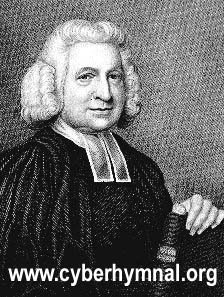
Amazing Love! How Can It Be…?

Charles Wesley wrote one of my favorite hymns, And Can It Be, in 1738 at the age of 20 years. It is astounding that a 20 year old could pen words with such depth, but obviously, Wesley wasn’t the average 20 year old – of any time period.

The whole song, every verse, is worthy of consideration and public singing, but I normally can’t get beyond the first verse’s “Amazing love! How can it be, that Thou, my God, shouldst die for me?” As the congregation continues to sing the particular verses that the song/worship leader has selected (rarely, if ever today, do they choose all of them), that question continues to reverberate through my heart and thoughts: How can it be, that Thou, my God, shouldst die for me?

The answer to this profound question is only found in Scripture, it can’t be derived from human reasoning. Simply put, the answer is found in God’s sovereign love.

You can hear this hymn here.

And can it be that I should gain
An interest in the Savior’s blood?
Died He for me, who caused His pain—
For me, who Him to death pursued?
Amazing love! How can it be,
That Thou, my God, shouldst die for me?
Amazing love! How can it be,
That Thou, my God, shouldst die for me?

’Tis mystery all: th’Immortal dies:
Who can explore His strange design?
In vain the firstborn seraph tries
To sound the depths of love divine.
’Tis mercy all! Let earth adore,
Let angel minds inquire no more.
’Tis mercy all! Let earth adore;
Let angel minds inquire no more.

He left His Father’s throne above
So free, so infinite His grace—
Emptied Himself of all but love,
And bled for Adam’s helpless race:
’Tis mercy all, immense and free,
For O my God, it found out me!
’Tis mercy all, immense and free,
For O my God, it found out me!

Long my imprisoned spirit lay,
Fast bound in sin and nature’s night;
Thine eye diffused a quickening ray—
I woke, the dungeon flamed with light;
My chains fell off, my heart was free,
I rose, went forth, and followed Thee.
My chains fell off, my heart was free,
I rose, went forth, and followed Thee.

Still the small inward voice I hear,
That whispers all my sins forgiven;
Still the atoning blood is near,
That quenched the wrath of hostile Heaven.
I feel the life His wounds impart;
I feel the Savior in my heart.
I feel the life His wounds impart;
I feel the Savior in my heart.

No condemnation now I dread;
Jesus, and all in Him, is mine;
Alive in Him, my living Head,
And clothed in righteousness divine,
Bold I approach th’eternal throne,
And claim the crown, through Christ my own.
Bold I approach th’eternal throne,
And claim the crown, through Christ my own.

Dragging Me Into the Future

I’m unhappy with my Israeli bank today. I knew it was inevitable, but I’m still not happy.

I went into the bank today to make a deposit (some cash and a check) and as I approached the teller, a woman I didn’t recognize, dressed in a bank-issued logo shirt stepped in front of me and asked what I wanted. I thought it was only too obvious since I was in the teller line, so I was caught a bit off guard.

When I told her I wanted to make a deposit, she told me I couldn’t make a deposit with the teller, only through the ATM. In an effort to clarify the new procedures, I asked, “I’m not allowed to make a deposit with a teller?” She was puzzled by my question and answered, “It’s not that you aren’t allowed to make a deposit with the teller, you just can’t do it anymore.” She offered to guide me through the new procedures at the ATM.

Now, I have to deposit checks at the machine inside, and cash at the machine outside. This is all for my benefit and convenience the manager assured me when I went to offer my complaint about the new way of doing things. I didn’t expect her to reverse the decision to “advance technologically,” but I felt it important to let her know exactly why I was disappointed.

Many of you know that I have a lot of technology gadgets and do a lot on the Internet, including banking. So, you might be wondering what is the big deal for me to move into the age of technology and make deposits via the ATM rather than through a teller. First the ironic point: The manager said the changes were to improve convenience. So, lets see how well the changes meet that goal: Instead of one transaction at the teller like before, I had to make two – one inside and one outside. The machine inside is only accessible during banking hours and the one outside has no way to supply envelopes for the deposit, which means it only “works” during banking hours unless I make a special visit to stock up on envelopes. Additionally, each transaction at this bank has a service fee. Now, I have two compared to only one prior to the changes. Additionally, self-service deposits prior to the changes were without charge, but not anymore. What happens if there is a discrepancy when I deposit cash in the outside ATM? There is no way for me to witness them counting my money, so any discrepancy becomes my word against theirs. My evaluation: The changes don’t meet the goal of customer convenience.

The second point is what I came to realize only today and is by far more important than the first. The truth is, I go to the bank so seldom that convenience isn’t a real issue for me. Then what’s the big deal? Human contact is my answer. As a foreigner here, I realized today that it has been an important thing for me to know that people know me when I go into the bank, even if only once a month or less. Without me needing to remind them, the tellers know that my account is on a passport number and not a national identity number. This information is important because bank accounts are located according to identification numbers, even though each account has a specific number of its own.

If I hadn’t had human contact in the bank, I wouldn’t have been able to get approved for an Israeli credit card, which has been more important for us as a symbol of stability here than for purchases. Our account numbers here, particularly as foreigners, don’t justify a card, but contact with people gave us enough credibility to be approved. When we had to put down a large security deposit for our current house, we had been directed to put it in an account that would have been to our disadvantage. A clerk, who recognized me, gave me some good direction on a type of secured account that would be better for us financially, and meet our security deposit needs. I will not have these things – the service or personal contact – anymore because our bank is moving into the future, also known as technology and automation.

I know I probably sound like an old-timer or a person full of self-contradictions, but I’m not happy about this “progress.”

Screwtape Letters Part 8

Chapter 9

Uncle Screwtape says,

“Never forget that when we [demons] are dealing with any [human] pleasure in its healthy and normal and satisfying form we are, in a sense, on the Enemy’s ground.”

Emphasis has been added to draw your attention to the critical wording of this sentence. These three words – healthy, normal, satisfying – dramatically qualify the statement. Without these qualifiers, the sentence takes on a completely different and opposite meaning.

Take some time to let this settle into your heart.

Further to the topic of the Christian and true pleasure, I recommend John Piper’s book, Desiring God: Meditations of a Christian Hedonist. Don’t be fooled by the title, there is nothing immoral within. Quite the opposite, in fact.

To be continued…

Screwtape Letters Part 7

Chapter 8

“The thief [Satan] does not come except to steal, and to kill, and to destroy. I [Jesus] have come that they may have life, and that they may have it more abundantly (John 10:10 NKJV).”

In his effort to explain the essential difference between the demons and God, Screwtape captures the truth of Jesus’ words in John 10:10 when he says, “We [Satan] want to suck in, He [God] wants to give out. We are empty and would be filled; He is full and flows over.”

Isn’t it interesting how, in our modern day, the two parties are usually described in the opposite way? Generally, we hear God described as one who wants to take things away, when He really wants to give us real life. Unfortunately, Satan has deceived so many to buy into the lie that he, the Destroyer, has more to offer than God, when, in reality, he is the one taking way.

So many times I have heard someone say, “If I can’t do X, Y, or Z in heaven, then I would rather be in Hell doing those things with my friends.” And every time, “X,” “Y,” or “Z” was simply one of Satan’s cleverly disguised efforts to suck real life out of that person. In the end, these poor souls will only discover that “X,” “Y,” or “Z” are not just life takers, but life destroyers.

How sad that Jesus extends a hand saying, “I have come that you might have life, and that you may have it more abundantly” and so many people mistake that as something other than an offer of true reality – true satisfaction – TRUE LIFE. Satan is a liar; don’t be deceived.

To be continued…